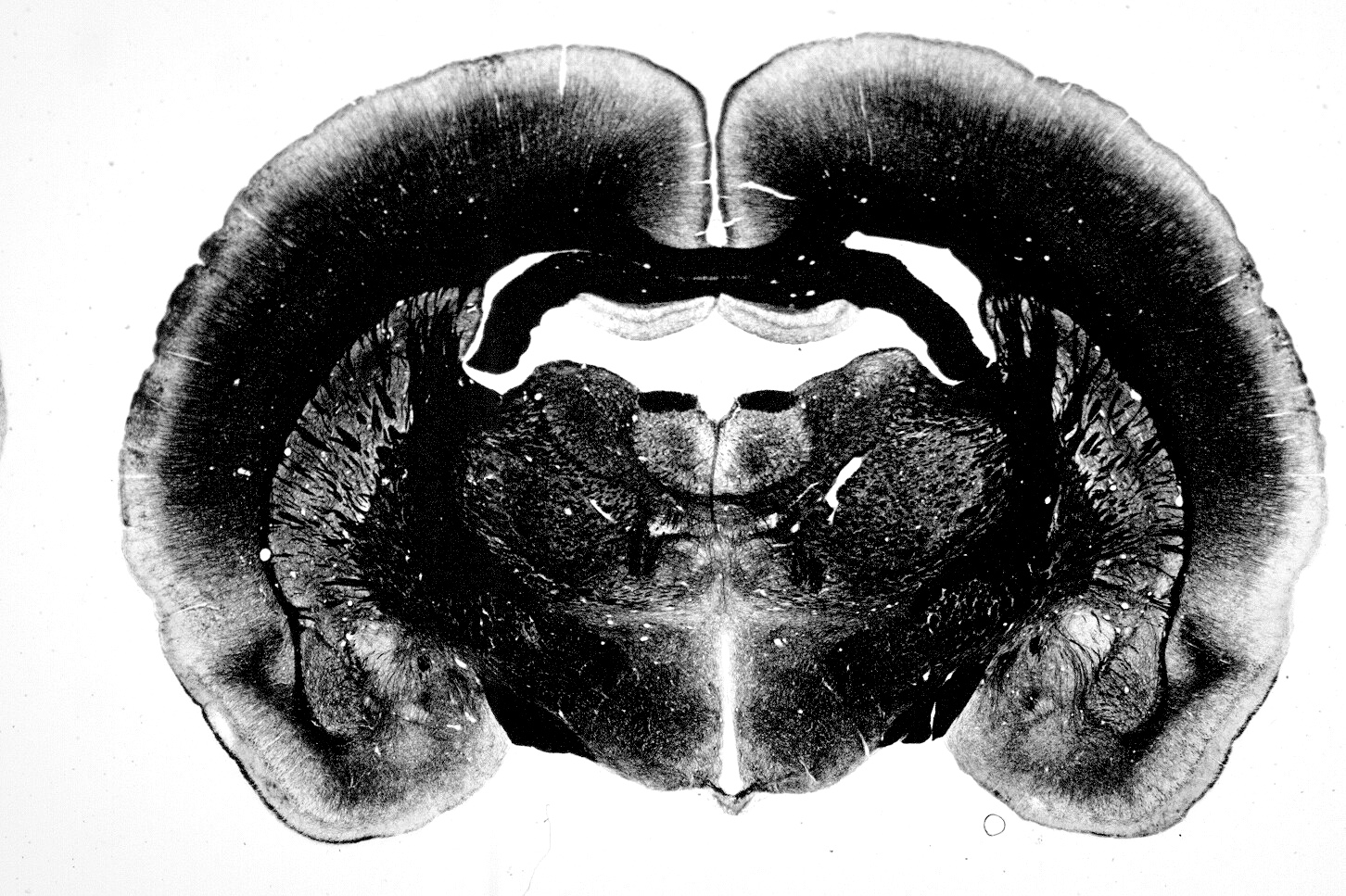
Neurodegeneration Studies Using the Amino-Cupro-Silver Technique
Detecting neuronal death in the central nervous system is a key challenge in studying neurological diseases and brain injuries caused by toxins or infections. My work focuses on analyzing how and when neuronal damage occurs.
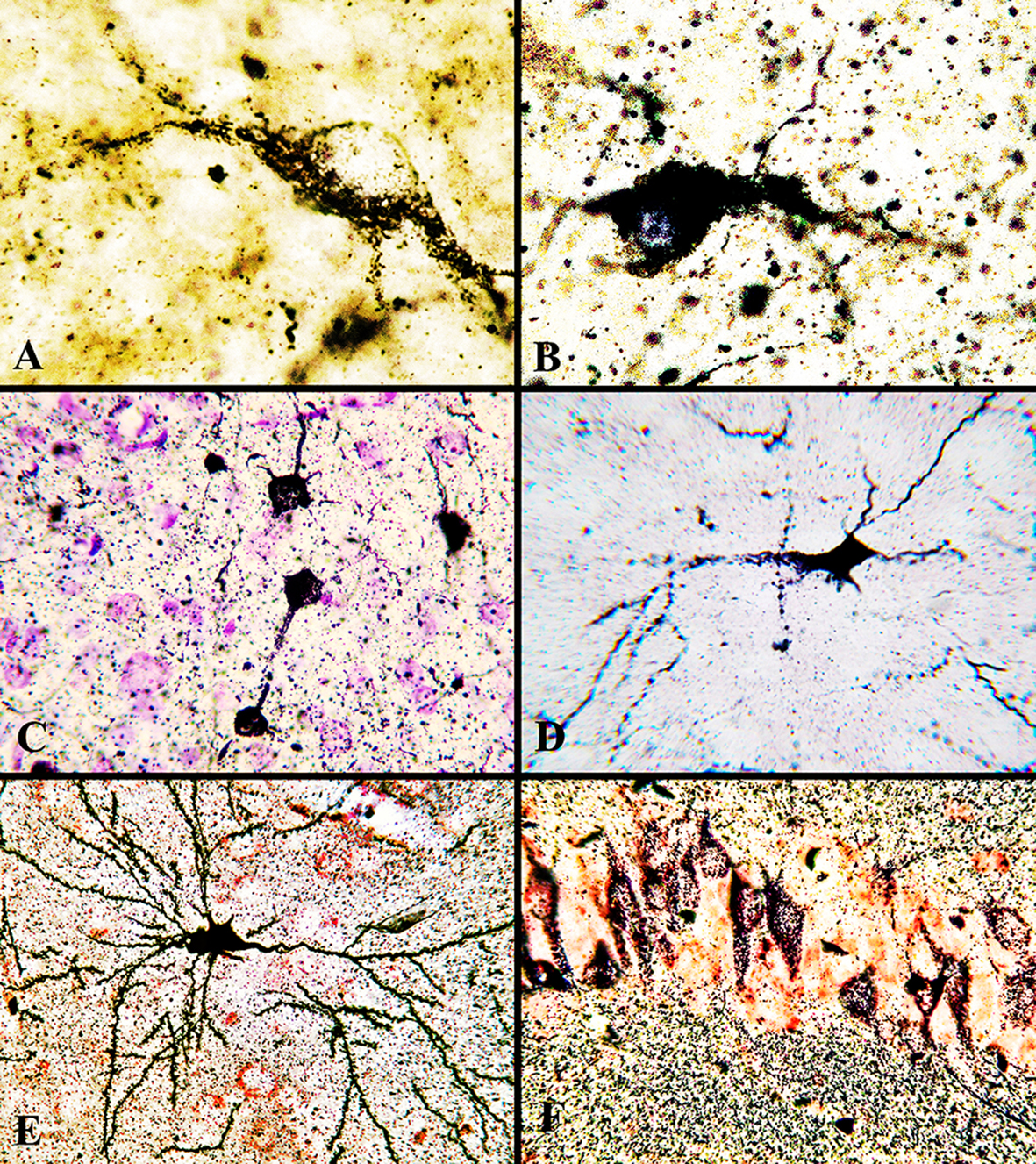
We study various experimental models, including exposure to drugs, neurotoxic substances, neurodegenerative diseases, or brain infections.
We use a highly sensitive technique developed in this lab, called amino-cupro-silver (A-Cu-Ag), which detects neurons at early and late stages of degeneration. This method reveals changes in the soma, dendrites, and axons, helping distinguish reversible from permanent damage.
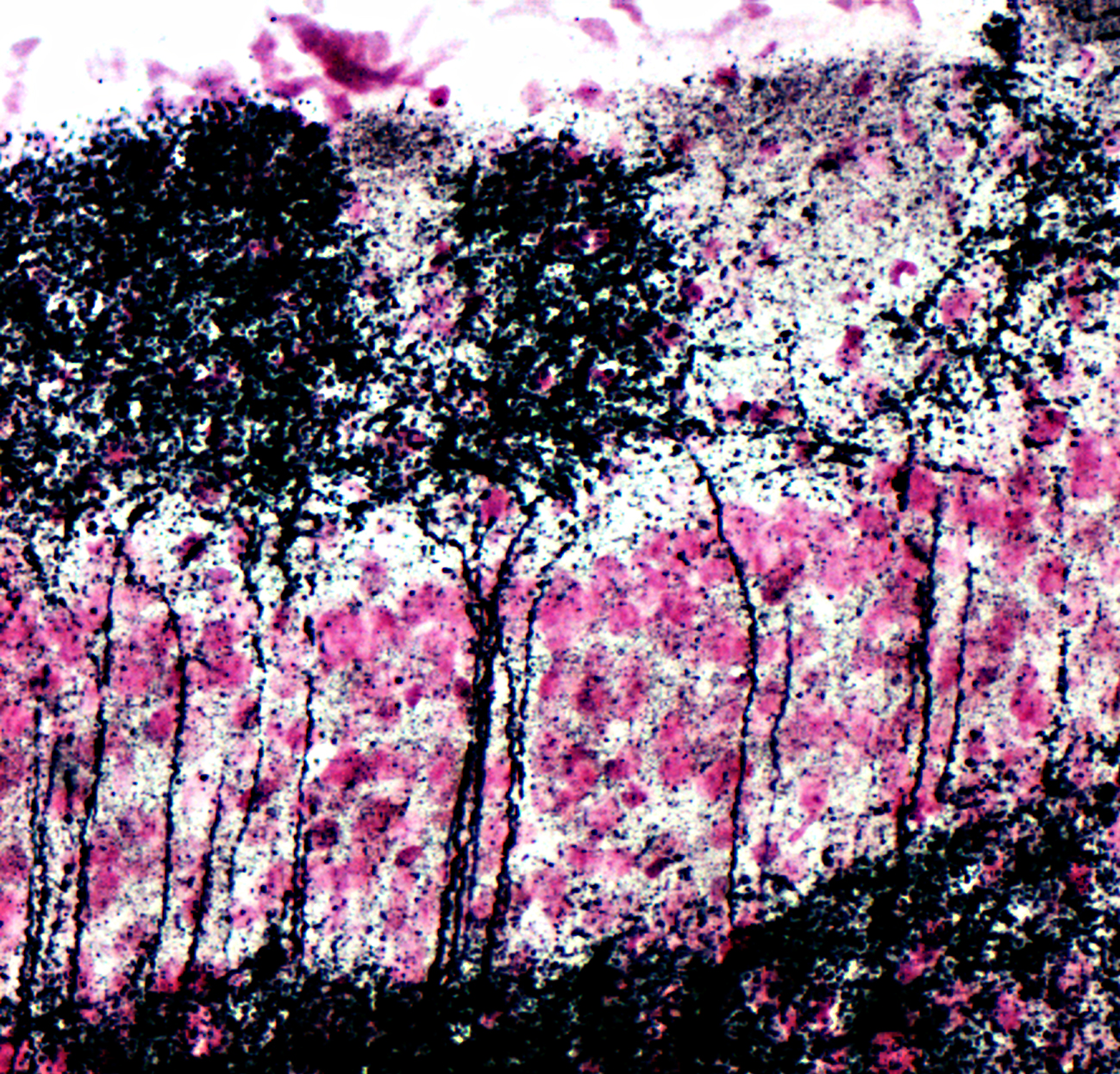
The technique also allows us to observe alterations in neuronal connectivity after injury. By combining histological and immunohistochemical methods, we track the spatiotemporal progression of damage and map structural connectivity changes, linking neuroanatomical findings to behavioral outcomes.
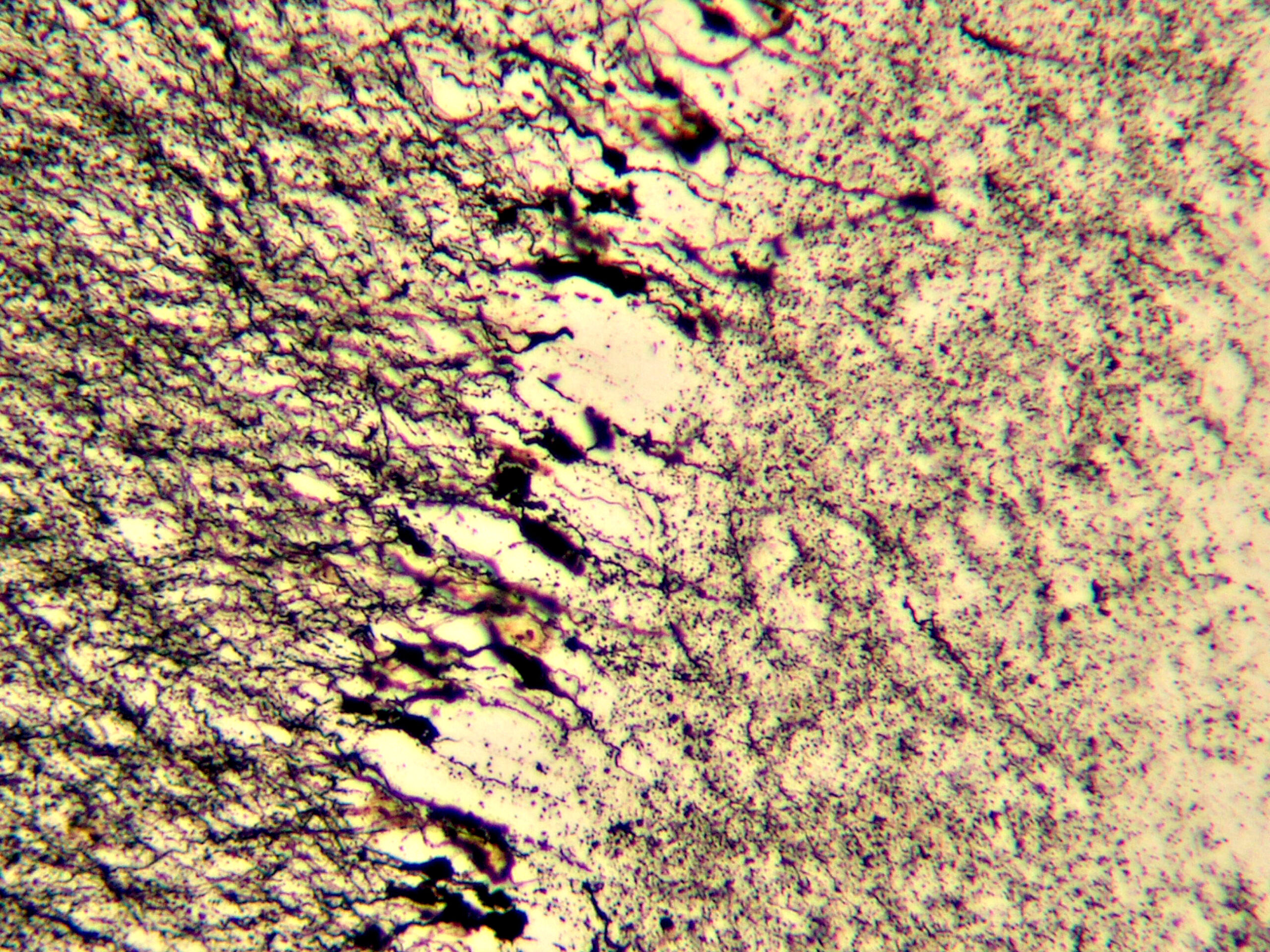
Studying neurodegeneration helps us understand how, when, and why neurons die, and the consequences of this process for nervous system function.
PUBLICATIONS (LATEST FIVE YEARS)
- Dargam S, de Olmos S, Marcos Pautassi R, Lorenzo A 2024. Footshock drives remodeling of perineuronal nets in retrosplenial cortex during contextual fear memory formation. Neurobiol Learn Mem. 2024 215:107990. doi: 10.1016/j.nlm.2024.107990.
- de Olmos S, Lorenzo A. Developing the theory of the extended amygdala with the use of the cupric-silver technique”. J Hist Neurosci. 2023. 32(1):19-38.
- Cataldi GG, Elorza SD, Toledano-Zaragoza A, de Olmos S, Cragnolini AB, Martín MG. Cholesterol-24-hydroxylase (CYP46) in the old brain: Analysis of positive populations and factors triggering its expression in astrocytes. J Comp Neurol. 2023. 531(3):486-499.
- Wies Mancini VSB, Di Pietro AA, de Olmos S, Silva Pinto P, Vence M, Marder M, Igaz LM, Marcora MS, Pasquini JM, Correale JD, Pasquini LA. Colony-stimulating factor-1 receptor inhibition attenuates microgliosis and myelin loss but exacerbates neurodegeneration in the chronic cuprizone model”. J Neurochem. 2022. 160(6):643-661.
- Sigwald EL, de Olmos S, Lorenzo A. Retrograde and anterograde contextual fear amnesia induced by selective elimination of layer IV-Va neurons in the granular retrosplenial cortex (A29). Neurobiol Learn Mem. 2020. 171:107229.doi: 10.1016/j.nlm.2020.107229.
- Complete and updated list available here